Articles tagged with: business continuity

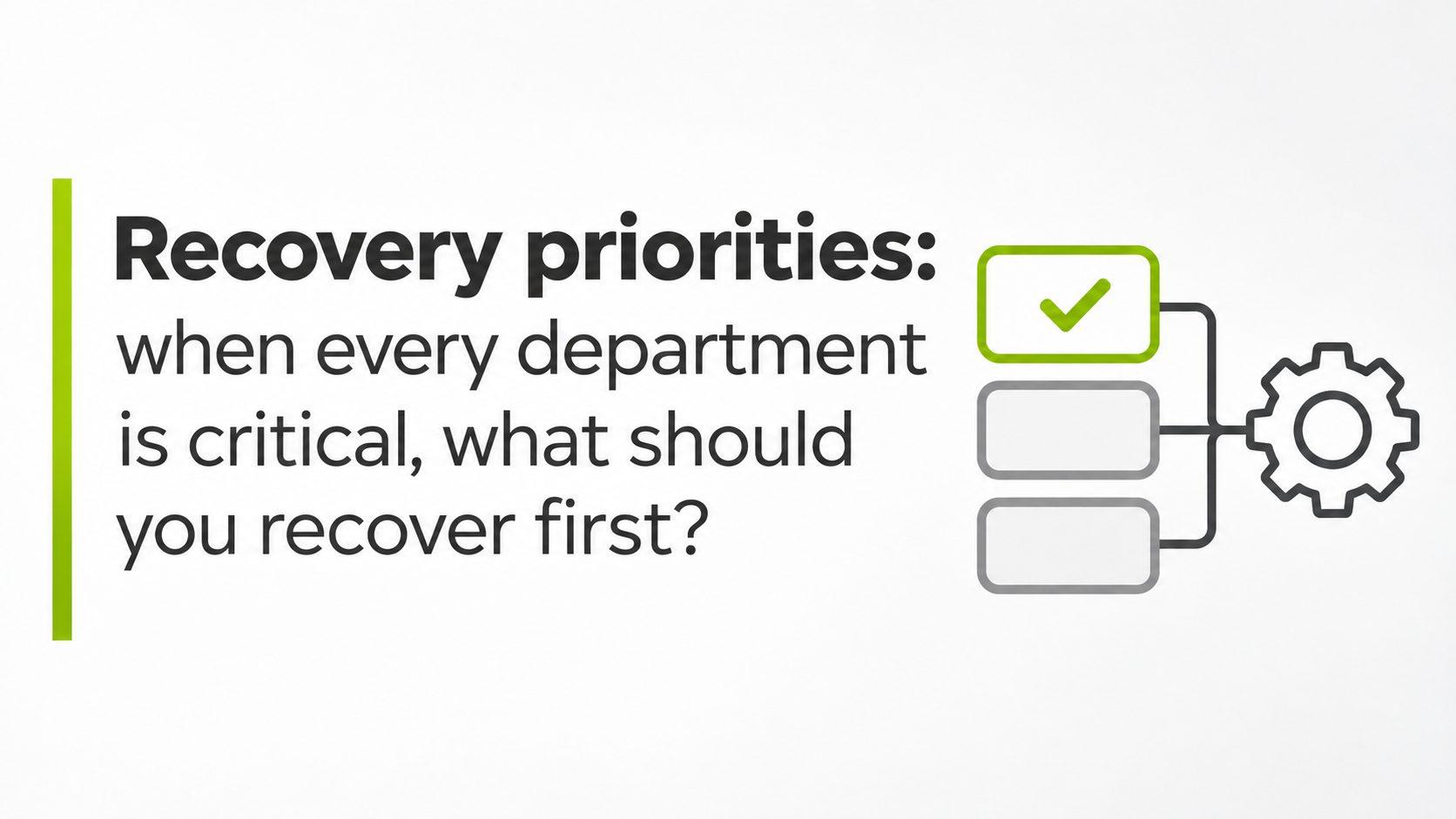
Recovery priorities: when every department is critical, what should you recover first?

Recovery Priorities Infographic

Recovery priorities: when every department is critical, what should you recover first?

How to compare impacts, dependencies and minimum capacity to decide what to resume first in business continuity.

⏱️ Estimated reading time: 7 minutes

In business continuity, recovery priorities are defined by comparing when the impacts of a disruption to each activity become unacceptable (MTPD) and identifying dependencies between activities. Recover first what is needed to prevent the impacts that become unacceptable earliest, including essential supporting activities. Recovery time objectives (RTOs) must provide for activities to resume at the defined minimum capacity before their respective MTPDs.
Training in 2027: new standards, regulation and competences to develop

Training in 2027_ New Standards and Skills


Training in 2027: new standards, regulation and competences to develop

What has changed in quality, auditing, privacy, cybersecurity and artificial intelligence, and how to turn these changes into priorities for training in 2027.

⏱️ Estimated reading time: 9 minutes

Planning training in 2027 starts with a question: what has changed in the organisation’s standards and frameworks, risks and responsibilities?

ISO publications, ENISA’s threat landscape and European and national legislation help identify different needs. It is important to distinguish between published standards and frameworks, whose changes need to be analysed; applicable obligations, which require preparation for the responsibilities involved; and draft standards, which should be monitored without treating their requirements as final.

The aim is not to train everyone in the same topics, but to understand who needs to make decisions, implement, oversee or assess, and which competences they need.

Cybersecurity and business continuity: what if your critical supplier fails?

Cybersecurity Supply Chain Warning


Cybersecurity and business continuity: what if your critical supplier fails?

Assess dependencies, decision-making and recovery capabilities. Explore Behaviour’s confirmed courses to strengthen your team’s skills.

⏱️ Estimated reading time: 4 minutes

The link between cybersecurity and business continuity becomes clear when a critical supplier fails. Imagine an essential application becoming unavailable, with no estimated recovery time. The IT team is looking for alternatives, operations teams are waiting for instructions and customers are still asking for answers.

Who decides what to do, and what preparation informs those decisions?

During this European Cybersecurity Month, this question belongs on the business agenda: beyond preventing attacks, are we prepared to keep operating when an external service fails?

Training in risk management, business continuity and information security: how to choose?

Business_Continuity_Risk_Information_Security_Management_Training

Training in risk management, business continuity and information security: how to choose?

A team may need training because it is about to start implementing ISO 27001. Another may already have the system in place but need to review responsibilities and records. The course may be the same, even though the work to be carried out afterwards is different.

⏱️ Estimated reading time: 4 minutes

When choosing training in risk management, business continuity or information security, the enrolment request should specify that work. This allows business unit management and HR to assess the course programme, select participants and plan when they will apply what they have learnt.

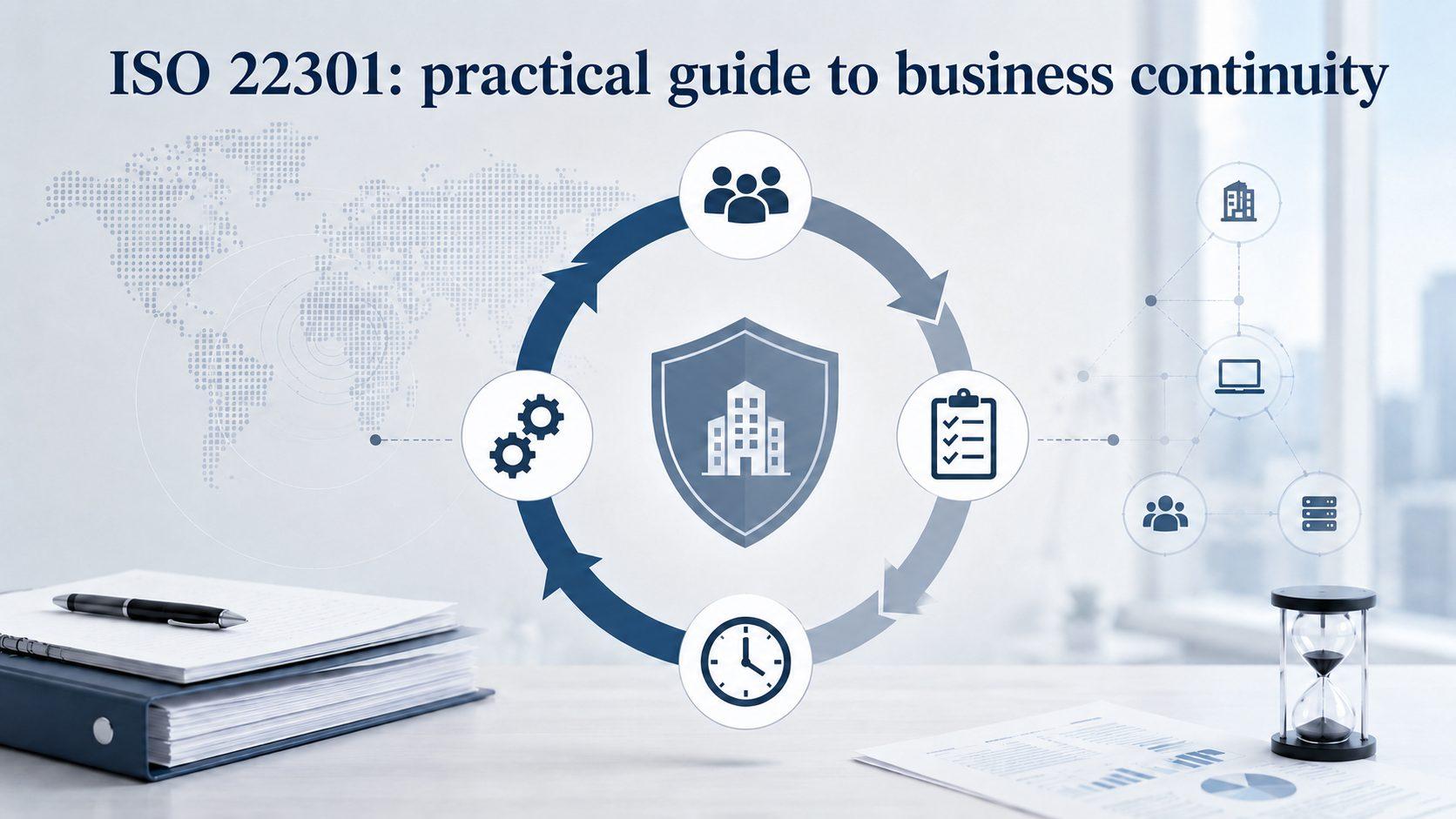
ISO 22301: practical guide to business continuity

ISO 22301_Practical Guide to Business Continuity

ISO 22301: practical guide to business continuity

How to prepare your organisation, structure evidence and build capability.

⏱️ Estimated reading time: 8 minutes

This practical guide to ISO 22301 and business continuity explains how to prepare your organisation, define recovery priorities and objectives, test plans and compile audit evidence.

ISO 22301 and business continuity: what is it and who does it apply to?

ISO 22301 specifies the requirements for establishing, implementing, maintaining and improving a Business Continuity Management System (BCMS). It can be applied by organisations of any size or sector that need to ensure the delivery of prioritised products and services during a disruption.

The standard is voluntary as a management system and certification framework. Nevertheless, legal, sector-specific or contractual requirements may require specific continuity, recovery and evidence capabilities. Certification is one way to demonstrate conformity with the standard, but it does not replace obligations applicable to the organisation.

Change management in information systems: a business continuity risk that cannot be ignored

Managing_Changes

Change management in information systems: a business continuity risk that cannot be ignored

Change management in information systems is not just a technical issue. When a change may affect critical processes, services, data, suppliers or operational capacity, it must also be analysed as a business continuity risk.

⏱️ Estimated reading time: 6 minutes

Some questions seem technical, but reveal a much broader concern.
One of them is this: “Is there any training course on change management in information systems?” The answer is yes. But the most important part of the answer is not only the name of the training course. It lies in understanding what this question really means.